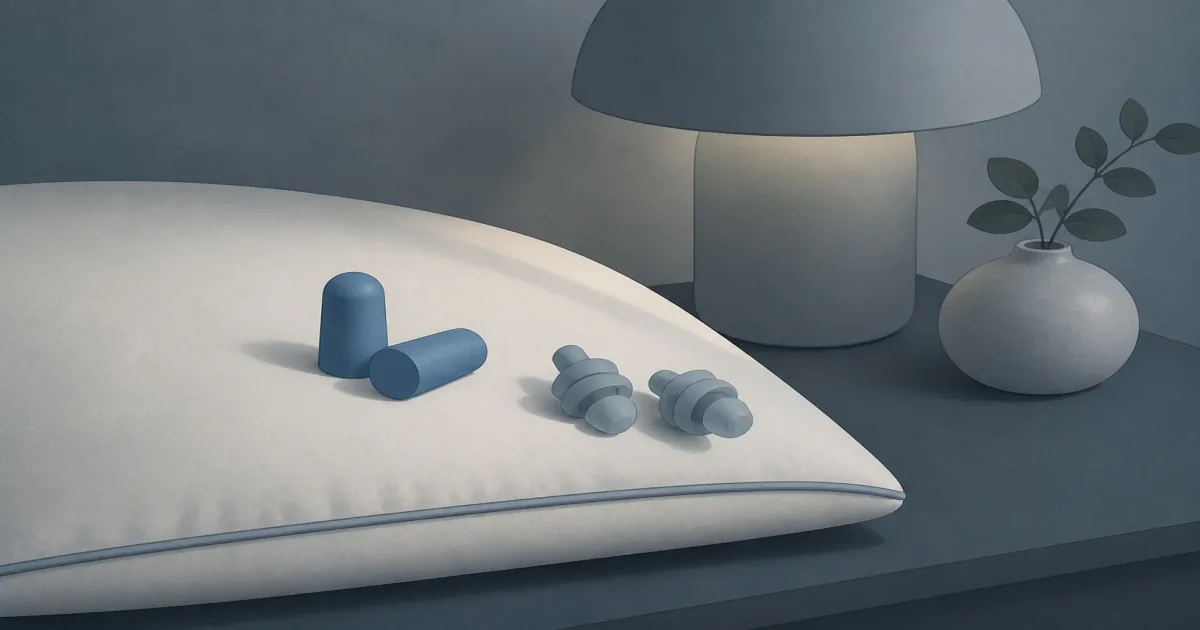
Best Ear Plugs for Sleeping (2026): 3 Types That Block Snoring
Sleep accessories
The best ear plugs for sleeping quiet a snoring partner or street noise without jabbing your ear into the pillow. Pick foam for max block, putty for side sleep, or reusable tips for nightly use.
Our picks
The best ear plugs for sleeping do one boring job well. They turn a noisy room into a quieter one so your brain can stop checking every footstep and fridge hum. They are not a cure for apnea, and they will not make a jackhammer next door disappear. They do help most people sleep through a partner's snore or a thin apartment wall. Plugs are one part of a quiet room, and our sleep-accessory collection covers the rest of the kit.
Pick the style that matches how you sleep. Foam blocks the most when you roll it correctly. Silicone putty sits flush for side sleepers. Reusable tips cost more up front and pay off if you wear plugs five nights a week. If you already like sound masking, keep a white noise machine in the mix. Plugs and masking often work better together than either alone.
Foam, putty, or reusable tips
Foam plugs expand to fill the canal. That seal is why high-NRR foam still wins for loud snoring. The tradeoff is bulk. Side sleepers often feel the pillow press the plug deeper, which gets annoying by 2 a.m.
Moldable silicone putty does not go deep into the canal. You warm a ball, press it over the opening, and sleep with a flat cap. Noise reduction is lower, but comfort on a side pillow is usually better.
Reusable silicone tips, like Loop Quiet 2, sit flush when you pick the right size. They are washable and travel well. They need a real seal. The wrong tip size leaks sound and feels loose.
Skip hard construction plugs meant for job sites. Soft sleep foam and putty exist because overnight wear is different from a loud afternoon.
Which ear plugs block the most noise?
Foam wins on raw noise reduction. Mack's Ultra Soft Foam is rated at 33 decibels of noise reduction, the highest in the Mack's line. Silicone putty like Pillow Soft is rated at 22, because it caps the ear opening instead of sealing inside the canal. Reusable silicone tips land around 24.
Those numbers describe a perfect seal, which is the part people miss. A foam plug rolled too fat never expands into the canal, and a putty ball pressed on top of an ear full of wax does almost nothing. Fit beats the rating every time.
If blocking a snoring partner is the entire goal, start with foam and get the insert right. If comfort is why you gave up on plugs before, move to putty and accept a gentler mute. If you want one pair you own for a year, go reusable and spend a night swapping tip sizes.
Best overall foam: Mack's Ultra Soft
Best for: People who need strong nightly noise reduction and like a big jar by the bed.
Mack's Ultra Soft Foam is the practical default. The foam is softer than many industrial plugs, and the 33 dB rating gives you more headroom when a snore spikes. Fifty pairs means you can toss a pair after a few nights without thinking about it.
Roll them thin. Insert deeply enough that the seal forms. If you leave half the plug hanging out, you bought a decoration, not hearing protection.
Choose Ultra Soft if: snoring or traffic is loud and you mostly sleep on your back or stomach. Skip Ultra Soft if: every side-sleep night ends with an ear ache from the pillow.
Best for side sleepers: Mack's Pillow Soft
Best for: Side sleepers and anyone who hates foam inside the canal.
Mack's Pillow Soft is moldable silicone putty. You shape it over the ear opening so nothing sticks out into the pillow. That is why side sleepers stick with it even when foam blocks more on paper.
Expect a gentler mute, not a total blackout. If the snore is extreme, try putty first for comfort, then keep a foam backup for the worst nights.
Choose Pillow Soft if: foam always digs in when you roll onto your ear. Skip Pillow Soft if: you need maximum block and you mostly sleep face-up.
Best reusable: Loop Quiet 2
Best for: Nightly users who want a washable, low-profile tip set with multiple sizes.
Loop Quiet 2 is the reusable pick here. The flexible tips sit flush when sized right, which helps side sleepers who refuse foam stems. Four tip sizes in the box matter more than the marketing line. Start with medium, then move down if you feel pressure, or up if sound leaks.
Clean them on a schedule. A sticky tip seals poorly and feels gross fast.
Choose Loop Quiet 2 if: you wear plugs most nights and want less waste. Skip Loop Quiet 2 if: you only need plugs for hotel trips. A foam jar is cheaper.
Best adjustable modes: LC-dolida
Best for: One pair that has to handle quiet sleep and still let you hear a conversation.
LC-dolida separates itself by giving you three noise-reduction levels in a single reusable plug, rated 14 to 35 dB. Low takes the edge off a shared room, medium suits travel and focus, and high is the sleep setting. That range is why it earns a place next to the fixed-level picks rather than replacing them.
The silicone sits flush and washes clean, so nightly use is realistic. Start with the medium tip, then drop a size if you feel pressure or go up if sound leaks. The seal, as with every reusable plug, is what actually decides how quiet your night gets.
Choose LC-dolida if: you want one pair for sleep, travel, and concerts and like switching modes. Skip LC-dolida if: your canals are very narrow, or you want the simplest possible plug.
How to choose by sleep position
If you share a bed with a snorer, also fix what you can in the room. Close the door gap, run steady masking sound, and keep ear plugs as the last layer, not the only plan.
How to wear them all night without sore ears
Most sore-ear complaints come from the insert, not the plug. Foam that is not rolled thin expands against the canal wall while it is still tight, and that pressure is what you feel at 3 a.m. Roll it down, pull your ear up and back, and hold the plug until it finishes expanding before you lie down.
Putty needs a different motion. Warm the ball first, press it over the opening without pushing it in, and keep it away from hair and lotion. A greasy ear or a strand of hair breaks the seal and lifts the cap.
Reusable tips are the easiest to fix, because you can change the size. If you feel pressure after an hour, go one size down. If sound leaks, go one size up. Give each size a full night, because the first ten minutes is not a fair test.
If your ears hurt the next morning, stop and try a different type before you buy more of the same thing.
Fit mistakes that waste a good plug
People blame the brand when the seal is the problem. Foam that is not rolled thin never expands correctly. Putty that is greasy or hair-tangled lifts off. Reusable tips one size too small leak all night.
Give a new style three nights. Night one is often about learning the motion, not judging the product. If your ear hurts the next morning, stop and try a different type. Pain is not a badge of better noise reduction.
Keep plugs clean and dry. Foam is disposable for a reason. Putty and reusable tips need a wipe-down so wax does not build into a seal killer.
Final take
The best ear plugs for sleeping match your position and how loud the room really is. Mack's Ultra Soft foam is the strong, cheap nightly jar. Mack's Pillow Soft putty is the side-sleeper comfort pick. Loop Quiet 2 is the reusable flush option when foam waste bothers you. LC-dolida is the adjustable pair when one plug has to cover sleep and loud rooms. Start with the style that fits how you actually sleep, not the highest number on the package alone.
If you want to compare this against the rest of the quiet-room kit, browse the sleep-accessory guides.
Frequently Asked Questions
What are the best ear plugs for sleeping?
Start with Mack's Ultra Soft Foam when you need strong noise block. Switch to Mack's Pillow Soft silicone if you side-sleep and foam pokes. Choose Loop Quiet 2 when you want a reusable, flush tip set.
Do ear plugs for sleeping block snoring?
They lower the volume. They do not erase every snore. Foam with a high NRR usually blocks more than putty. Pair them with a white noise machine if the room is still lively.
Which ear plugs block out the most noise?
Foam blocks the most. Mack's Ultra Soft Foam carries an NRR of 33, the highest in the Mack's line, and silicone putty sits at 22. Reusable silicone tips land in between, around 24 dB. Softness and a proper seal matter more than the number on the package, because a plug that leaks blocks almost nothing.
Are foam or silicone ear plugs better for sleep?
Foam usually blocks more sound. Silicone putty is kinder for side sleepers and sensitive canals. Reusable silicone tips sit in the middle when you size them well.
Can side sleepers wear ear plugs?
Yes. Prefer flush putty or low-profile reusable tips so the pillow does not drive a foam stem into your ear.
Is it okay to sleep with earplugs in every night?
For most people, yes, as long as your ears stay clean and dry and you swap to a fresh pair or wash reusable tips regularly. Stop if you wake up with pain, itching, or drainage, and see a clinician if that keeps up. Never push foam in so far that it is hard to remove.
How do I put foam ear plugs in correctly?
Roll the foam thin, pull your ear up gently, insert deep enough to seal, and hold until it expands. A half-inserted plug barely helps.
Are reusable sleep ear plugs worth it?
They are if you wear plugs most nights and want less waste. Budget foam still wins for guest rooms and one-off hotel stays.
Should I use ear plugs or sleep headphones?
Use plugs when you only need quieter air. Use sleep headphones when you want guided audio or a podcast at a low volume.