Best Latex Mattress Topper (2026): Soft 2-Inch vs Soft 3-Inch
Mattress toppers
A latex mattress topper softens a firm bed with bounce instead of a slow foam hug. Compare Sleep On Latex soft 2-inch with soft 3-inch on cover cost, sheet fit, and how much of a reset each one really is.
Our picks
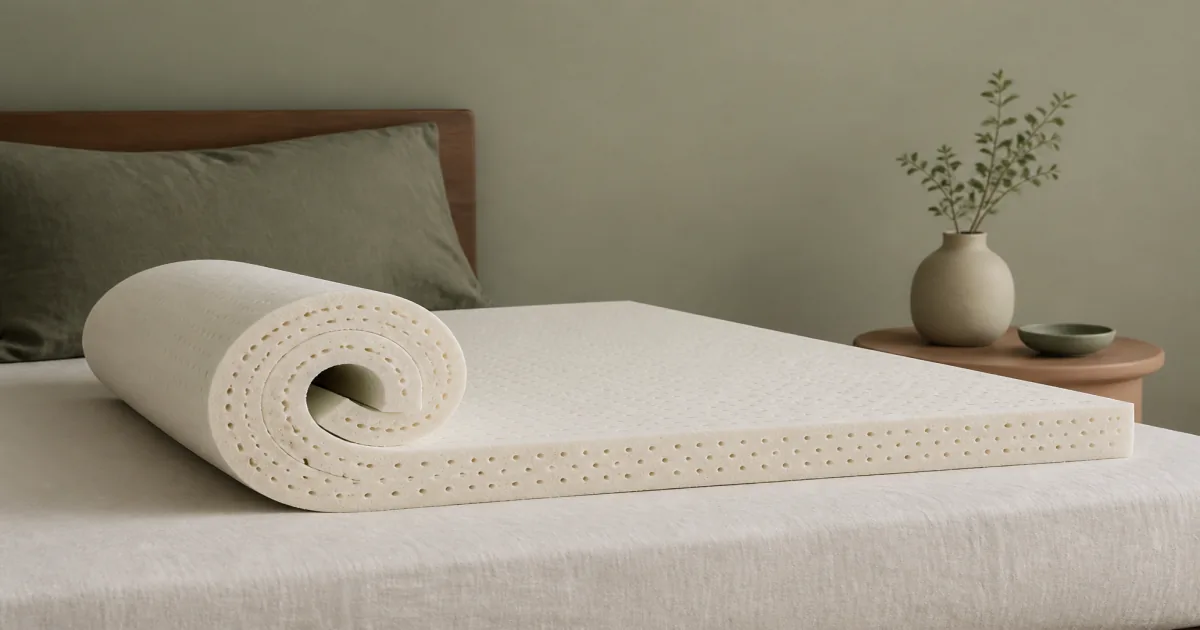
A latex mattress topper is a solid rubber-tree foam slab that compresses and springs back. It softens a board-firm mattress without the slow memory-foam sink that leaves some people feeling stuck. Hot sleepers and combination sleepers often land here after foam made them sweat.
The catch most latex pages skip: the Sleep On Latex slabs ship as bare foam with no cover. A fitted sheet will cover one, and the brand sells a GOTS-certified organic cotton cover separately, about $90 for a 3-inch queen. Budget that or plan on sheets before you compare price.
Browse more topper options in our mattress toppers category. If you are still choosing between foam hug and latex bounce, start with memory foam vs latex topper, then come back here to pick thickness and firmness. The best mattress topper guide covers plush gel-foam softeners when latex is not the feel you want.
Quick comparison: the two soft latex builds
Both are the same GOLS-certified organic Dunlop latex from organically grown rubber trees. The only real difference is height, and height is the whole decision.
Is a 2-inch or 3-inch latex topper better?
For most firm mattresses, start with the 2-inch soft. It softens the surface and keeps sheet fit easier. Go to the 3-inch soft only when the 2-inch still leaves the bed too hard. The extra inch is the step you take after a thin layer fails, not before.
Latex does not glue you into a dent. You get cushion, then pushback. That is the whole point of shopping latex instead of another gel-foam cloud. The line also ships 1-inch builds, but a 1-inch slab is barely a comfort skin, so the 2-inch and 3-inch are the two real choices.
What changes when you go from 2 inches to 3?
You gain a full inch of give at the shoulder and hip, which is the difference between a light soften and a real reset. You also gain weight, cost, and a deeper sheet requirement. The feel is the same soft latex either way, so you are buying height, not a different material.
Which thickness do side sleepers need?
Side sleepers usually need the 3-inch soft if a 2-inch layer still leaves the shoulder on the firm slab, because shoulders carry the most pressure. Back and stomach sleepers often do fine with the 2-inch, since they need less give to keep the spine level.
Hero pick: Sleep On Latex Pure Green 2 Inch Soft
The Sleep On Latex Pure Green 2 Inch Soft Latex Topper is the right first latex buy for most firm mattresses. Soft Dunlop latex takes the sharp edge off shoulders and hips while staying responsive when you roll. GOLS organic latex and thousands of buyer ratings (4.3 stars over 3,735 reviews) make it a safer starting point than an unbranded latex blend.
Two inches is a comfort skin, not a new bed. Expect a clearer surface soften and cooler nights than dense gel foam, not a hotel pillow-top rebuild. Sheet fit usually stays manageable if you already use deep pockets, because a 2-inch layer on a 10-inch mattress is a 12-inch stack. Pair it with a protector so the bare latex stays clean.
Choose this when you sleep hot, hate the stuck feeling of memory foam, and want a reversible bounce layer you can keep for years. Skip it if you need a dramatic loft change on a rock-hard mattress. That job belongs to the thicker soft option, or to a plush foam topper if you actually want the hug.
Choose Sleep On Latex 2 Inch if: you want cooler bounce, a moderate soften, and a first latex buy that is easy to sheet. Skip it if: your mattress is still board-hard under a 2-inch layer.
Bigger reset: Sleep On Latex Pure Green 3 Inch Soft
The Sleep On Latex Pure Green 3 Inch Soft Latex Topper adds height so the bed changes more while keeping the same soft latex bounce. That helps when soft 2-inch latex still left you aware of the firm slab underneath.
Three inches is heavier to unbox and costs more. A 3-inch layer on a 10-inch mattress is a 13-inch stack, so fitted sheets almost always need to be deep pocket, and the matching $90 organic cover is more likely worth it at this height. The payoff is a clearer comfort reset that still sleeps cooler and more responsive than most gel foam of the same thickness.
Choose the 3-inch soft when you already know you want latex and you need more than a light skin. Skip it as a first experiment if budget is tight and a 2-inch soft trial would answer the feel question first.
Choose Sleep On Latex 3 Inch if: a 2-inch layer was not enough and you want a fuller reset. Skip it if: you are still unsure about the latex feel and would rather test with the thinner slab.
Does a latex topper sleep cooler than memory foam?
Yes, for a simple reason. Latex springs back and stays more open, so it does not wrap your whole body in a slow hug the way dense memory foam does. That matters because trapped body heat comes from contact with foam, and less contact means less heat. It is still foam on a mattress, so a latex topper softens the surface but does not cool a warm room.
If heat is the main problem and the mattress underneath is a thick memory-foam slab, a latex topper helps the surface but cannot fix the core. Pair it with breathable sheets from the best cooling mattress topper conversation when you need a different material family altogether, or lighter bedding from linen sheets.
Why does less body contact mean less heat?
Trapped heat comes from the surface area of foam that touches your body. A slow memory-foam hug wraps more of you, so more foam holds your heat. Latex holds you higher and lets you roll, so less of you stays in contact and the heat has fewer places to sit.
How do you set up a latex topper?
- Unroll the topper flat on a dry, intact mattress and let it air for a day before the first sleep.
- Add a fitted protector or the optional organic cover before sheets so the latex stays clean and does not creep.
- Measure the new total height and switch to deep pocket sheets if the corners pop.
- Sleep on it several nights before judging. Latex bounce feels different from foam on night one.
- Rotate the slab every few months so wear stays even.
Latex is denser than gel foam, so a 3-inch queen is a two-hand lift. Rotate it with a partner rather than dragging it across the bed. Spot-clean spills with mild soap and water, never soak the slab, and keep it covered in storage so the foam does not dry out.
How do you keep bare latex from sliding?
A bare latex slab has no skirt and no straps, so it can creep on a smooth mattress. A fitted protector or the optional organic cover gives it grip. If you skip the cover, tuck the slab under a fitted sheet that is tight enough to hold it in place.
Who should skip latex
When is latex the wrong material?
Latex is the wrong buy when you want a deep, slow sink, when the mattress core has already collapsed, or when you only need a temporary soften on a guest bed. Each of those is a different job with a cheaper answer.
Skip it if the mattress is already soft or hammocked. Latex on a collapsed core still leaves you in a hole. Fix or replace the mattress first.
Latex costs more than budget gel foam. If you only need a temporary soften for a guest room, a cheaper foam topper from that guide may be enough. For the hug-versus-bounce decision, read memory foam vs latex topper, and for sizing by height, see the mattress topper thickness guide.
Final take
The best latex mattress topper for most firm beds is the Sleep On Latex 2 Inch Soft: cooler bounce, honest soften, easier first buy. Move to the 3 Inch Soft when you need a bigger change without sliding back into slow foam. Decide material first, then thickness, then cover and sheet depth. That order beats buying the thickest slab on the page and hoping.
Frequently Asked Questions
What is the best latex mattress topper for most people?
Start with the Sleep On Latex Pure Green 2 Inch Soft if you want bounce and a cooler soften on a firm bed. Move to the 3 Inch Soft when you need a bigger surface change.
Is latex cooler than memory foam?
Usually yes. Latex springs back and has a more open feel, so heat does not sit in a slow hug the way it can in dense gel foam. It is still foam on a mattress. It will not refrigerate a hot room.
How thick should a latex topper be?
Two inches softens lightly and keeps sheet fit easier. Three inches is the usual step when the mattress still feels too hard after a thinner layer. Four inches is uncommon and can throw off sheets and edge feel.
Do I need a cover on a latex topper?
The Sleep On Latex slabs ship as bare foam with no cover. A fitted sheet will cover one, and most buyers skip the cover. The brand sells a GOTS organic cotton cover separately, about $90 for a 3-inch queen. Bare latex can creep on a slick mattress, so a fitted protector or cover also doubles as grip.
Will a latex topper stay in place on the bed?
It can slide on a smooth mattress when it is bare, because there is no skirt and no straps. A fitted protector or the optional cover holds it. Rotate the slab every few months so any wear stays even.
Latex vs memory foam topper: which should I buy?
Read the memory foam vs latex topper comparison if you are still deciding the material. This page ranks latex shopping options once you already want bounce over a slow contour.
Does a new latex topper smell?
It has a mild earthy smell out of the bag that fades. Sensitive noses often notice it most on night one. Unpack it a day early and let it air, and the smell eases once a mattress cover or protector goes over it.
Will a latex topper fix a sagging mattress?
No. Latex changes the comfort layer on a sound mattress. A hammocked core still needs replacement. Soften a firm, intact bed. Do not stack latex on a collapsed one.
Are latex toppers good for side sleepers?
Soft or medium latex can work if there is enough thickness for shoulders. Very firm latex on a thin slab can leave pressure at the hip. Side sleepers who need a deep hug sometimes still prefer a plush memory-foam option from the best mattress topper list.
How long does a latex topper last?
Natural latex often outlasts budget gel foam. The Sleep On Latex foam scored 97 out of 100 on the LGA physical-duration test, and the brand says the topper can outlast the mattress under it. Expect years, not months, if the mattress underneath stays flat.