Best Mattress for Heavy People (2026): Extra-Firm and High-Capacity Picks
Mattress types
Heavier sleepers do not need a soft bed with more cushion. They need a dense support base, a firm surface, and a stated weight limit. Here are three builds that hold up.
Our picks
For most shoppers, the best mattress for heavy people is the VISCOFLEX Extra Firm 14-Inch King. It carries a weight capacity close to 995 pounds and a base dense enough that a heavier body does not push through the comfort layers.
The mistake heavier sleepers make is buying softness. A plush bed feels good for a night and then lets your hips drop below your shoulders, which is where morning back pain comes from. Weight changes firmness too. A bed rated medium-firm feels softer to a 300-pound sleeper than to a 150-pound one, because more of the foam compresses under you.
Browse the mattress types guides if you are still choosing a construction. The best hybrid mattress for couples guide covers coil builds that isolate motion, which matters if you share the bed.
One honest note before the picks. The best beds for heavier sleepers often ship direct from the brand, and the big names in that category are not on Amazon. These three are the strongest Amazon builds that publish a real weight capacity and hold up under load.
What a heavy sleeper actually needs
Three things decide whether a bed holds up at a heavier weight, and none of them is how thick the pillow top is.
The first is a dense support layer. High-density base foam or a reinforced coil unit resists compression, so it does not pack down and stay down. This is the layer that keeps your spine level and the layer that outlasts the comfort foam on top of it.
The second is a firm surface. Back and stomach sleepers do best on firm or extra-firm, because a firm surface stops the hips from sagging into a V. Side sleepers at a heavier weight can go medium-firm, since the shoulder and hip still need some give to avoid pressure points.
The third is a real weight limit. If the maker will not publish one, assume the bed was built for 250 pounds per side. A stated capacity of 450 pounds or more tells you the support system was engineered for load, not just tested once.
Quick comparison
Best overall: VISCOFLEX Extra Firm 14-Inch King
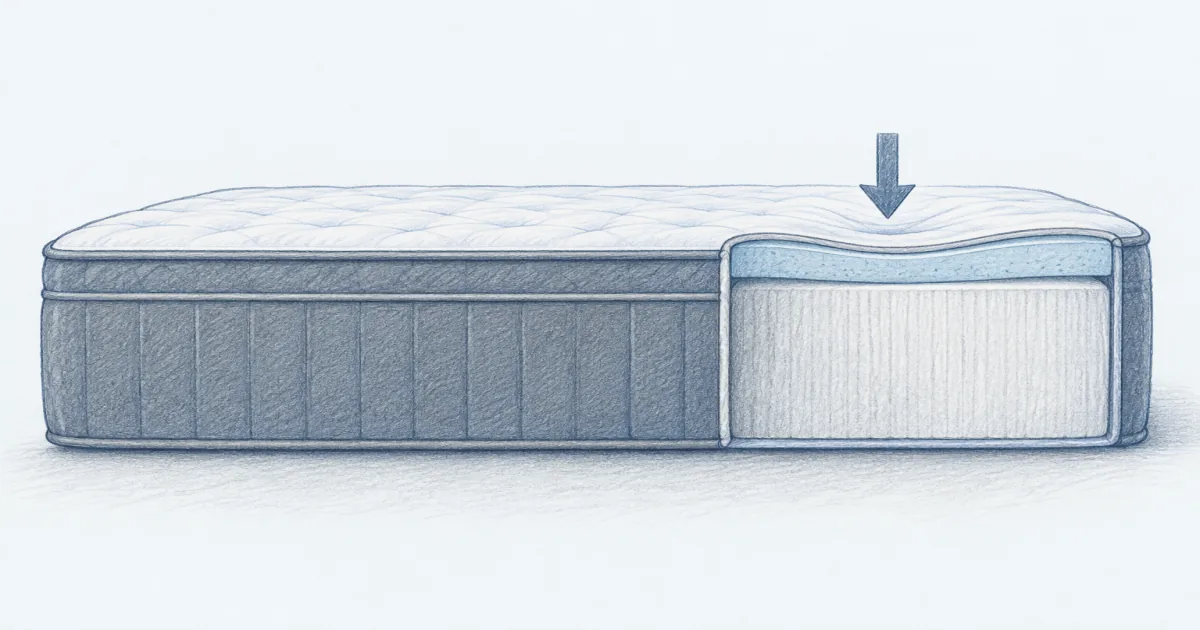
The VISCOFLEX Extra Firm 14-Inch King is the pick when support matters more than cushion. It is an all-foam build with a six-layer stack: gel memory foam on top, transition layers in the middle, and a high-density base doing the real work. The published weight capacity sits around 995 pounds, which is the strongest signal here that it was built for load rather than adapted from a lighter design.
The feel is extra firm, and it is firmest at depth. That sounds odd, but it is the right behavior. A heavy midsection presses through the soft top layer quickly, then meets resistance that stops the sink before the spine goes out of line. Back and stomach sleepers get the most from it.
You also get a 365-night trial and 10 years of coverage, which is generous for the price. The two honest limits are the perimeter and the shoulder. There is no firm edge, so sitting on the side compresses the foam, and a strict side sleeper may want a bed with more give at the shoulder.
Choose VISCOFLEX if: you want the highest weight capacity and a genuinely firm foam bed. Skip VISCOFLEX if: you sleep mostly on your side, or you need a firm edge.
Best value extra-firm: SLEEP100 Extra Firm 14-Inch Queen
The SLEEP100 Extra Firm 14-Inch Queen is the value lane, and it is the most affordable way into an extra-firm bed that is built for weight. The support core is high-density foam, and the comfort layer is gel-infused foam over a fiberglass-free, breathable knit cover. For under $400 for a queen, that is a lot of support structure.
Firmness reads about 7.5 to 8 out of 10 on most scales. Heavier sleepers tend to find it stable rather than punishing, because the dense base spreads the load instead of collapsing under it. Back sleepers get a level spine, and stomach sleepers get the minimal hip dip they need.
The listing is refreshingly direct about how weight changes the feel. Under 130 pounds it reads firmer, between 130 and 230 pounds you get some cushioning, and over 230 pounds it feels more contouring. If you are buying for a heavier body, that is the band you want to read. It is on an active deal right now, so it is a good time to buy if you have been comparing extra-firm queens.
Choose SLEEP100 if: you want an extra-firm queen with a 365-night trial for a mid-range price. Skip SLEEP100 if: you want a plush surface, or you are a light side sleeper.
Best cooling: Sweetnight CoolNest 14-Inch King
The Sweetnight CoolNest 14-Inch King is the pick for a heavier sleeper who runs hot. Gel-infused memory foam and a phase-change foam layer pull heat off the surface, and the vented 3D-woven cover lets moisture escape. That combination is why it does not turn into a warm pocket the way a plain foam slab does.
The 5-zone support layer cushions the hips and shoulders, and the bed carries a chiropractic association endorsement for pressure relief. Motion isolation is strong, so a partner rolling over does not register across the mattress. If you share the bed and both of you sleep warm, that matters.
Set expectations on firmness. This is a medium bed, about a 5 out of 10. A heavier back sleeper will still feel supported because of the zone design, but side sleepers and anyone near the top of the weight range will want the extra firmness of the two picks above. The edge is also soft, so keep your morning sit to the middle.
Choose Sweetnight CoolNest if: you sleep hot and want a cooling foam king with strong motion isolation. Skip Sweetnight CoolNest if: you need real extra-firm support under a very heavy body.
Weight limits and the specs that matter
Weight capacity is the fastest way to sort real heavy-duty beds from marketing. Most standard mattresses are engineered for about 250 pounds per side. A bed that publishes 450 pounds or more is telling you the support system was built for load.
After capacity, read the build. A reinforced or higher-gauge coil unit resists compression better than a standard one, which is why a hybrid holds up under heavy use. If it is an all-foam bed, the base density is the number that counts. High-density base foam keeps its shape where a cheaper low-density layer packs down.
Firmness is the last piece, and position decides it. Back sleepers at a heavier weight want firm so the spine stays straight and the hips stay level. Stomach sleepers want the same. Side sleepers should stay at medium-firm so the shoulder and hip can still settle.
How to make a mattress last at a heavier weight
A good bed still needs the right foundation under it. These four habits add years.
- Put it on a solid base. A slatted platform or an adjustable base supports the whole mattress evenly. A flexing box spring lets the middle sag.
- Rotate it every three months. Even a dense base compresses where you sleep. Rotating spreads that load across the surface.
- Skip the soft topper. Adding plush foam to a firm bed can undo the support you bought. If you want a little cushion, use a thin, dense layer, not a deep pillow top. Our mattress topper for heavy people guide covers the toppers that hold up under weight.
- Give it the full expansion window. A bed-in-a-box needs 24 to 72 hours to reach its real firmness. Do not judge it on night one.
Who should skip these picks
Skip the extra-firm builds if you sleep mostly on your side. A firm surface is right for back and stomach sleepers, but a side sleeper needs more give at the shoulder to avoid pressure. Start with a medium-firm hybrid instead and check the best mattress for back pain guide for builds that balance the two.
Skip all three if your current mattress still supports you and only the surface feels worn. A dense topper is the cheaper fix, and the mattress topper guides explain which ones survive a heavier body.
If you are buying for a couple and only one partner is heavy, buy for the heavier side. The lighter sleeper will simply find the bed firm, which is easier to live with than a bed that sags under the heavier one.
Bottom line
The best mattress for heavy people is a firm bed with a dense core and a real weight rating. The VISCOFLEX Extra Firm 14-Inch King wins on capacity, with a base rated to about 995 pounds and extra-firm pushback at depth. The SLEEP100 Extra Firm 14-Inch Queen brings the same idea to a queen at a lower price, and the Sweetnight CoolNest 14-Inch King is the pick when cooling and motion isolation matter more than maximum firmness.
Match the bed to how you sleep, keep it on a solid foundation, and rotate it. A heavier sleeper gets more years out of a cheap firm bed than a soft expensive one.
For the rest of the category, browse the mattress types guides. If back pain is the main problem rather than support, the best mattress for back pain guide covers builds with lumbar support.
Frequently Asked Questions
What is the best mattress for a heavy person?
The VISCOFLEX Extra Firm 14-Inch King is the best mattress for heavy people who want maximum support. Its high-density base is rated to about 995 pounds, so a heavier body does not bottom it out. The SLEEP100 Extra Firm 14-Inch Queen is the value pick, and the Sweetnight CoolNest 14-Inch King is the one to choose if you also sleep hot.
What is the best mattress for a 300-pound person?
Look for a firm or extra-firm bed with a high-density base or a reinforced coil core, and a stated weight capacity well above 300 pounds. A standard all-foam bed rated to 250 pounds per side is not built for that load. Any of the three picks here will support a 300-pound sleeper, with the two extra-firm builds holding up longest.
Do heavier people need a firmer mattress?
Yes, but read firmness correctly. Body weight compresses foam, so a medium-firm bed that feels right to a 150-pound sleeper can feel soft to a 300-pound sleeper. A firm or extra-firm surface keeps the spine level and stops the hips from dropping, which is what prevents the morning ache.
What is the best strong mattress for a heavy person?
The strongest builds combine a dense support layer with either an extra-firm foam core or a reinforced coil unit. Weight capacity is the clearest signal. Above 900 pounds, the bed is engineered for heavier sleepers rather than adapted from a standard design.
Why does a mattress weight limit matter?
The limit tells you how much load the support layers are engineered to take before they compress and stay compressed. Sleep near or above the limit and the foam packs down early, which shows up as a dip where you sleep. Match the limit to your body weight plus a partner.
Is memory foam or a hybrid better for a heavy person?
A hybrid with reinforced coils usually lasts longer under heavy use because the coil unit distributes load over a wider area and resists permanent compression. High-density memory foam can work well too, but only when the base foam is dense and the bed is rated for the weight.
How long should a mattress last for a heavier sleeper?
A well-built extra-firm bed should run eight to ten years for a heavier sleeper. A standard bed rated to 250 pounds per side may show impressions in two to three years at 300 pounds. Rotation every three months helps even out the wear.
Does a heavier sleeper need a box spring?
No. A slatted platform, a solid foundation, or an adjustable base all work and are usually better, because they support the mattress evenly. Skip a flexing box spring, which can add sag and shorten the life of the bed.