Duvet vs Comforter: Which Bedding Setup Is Easier to Live With
Bedding
A comforter is one sewn piece you sleep under. A duvet is an insert plus a washable cover. Pick the setup that matches how often you do laundry.
Our picks
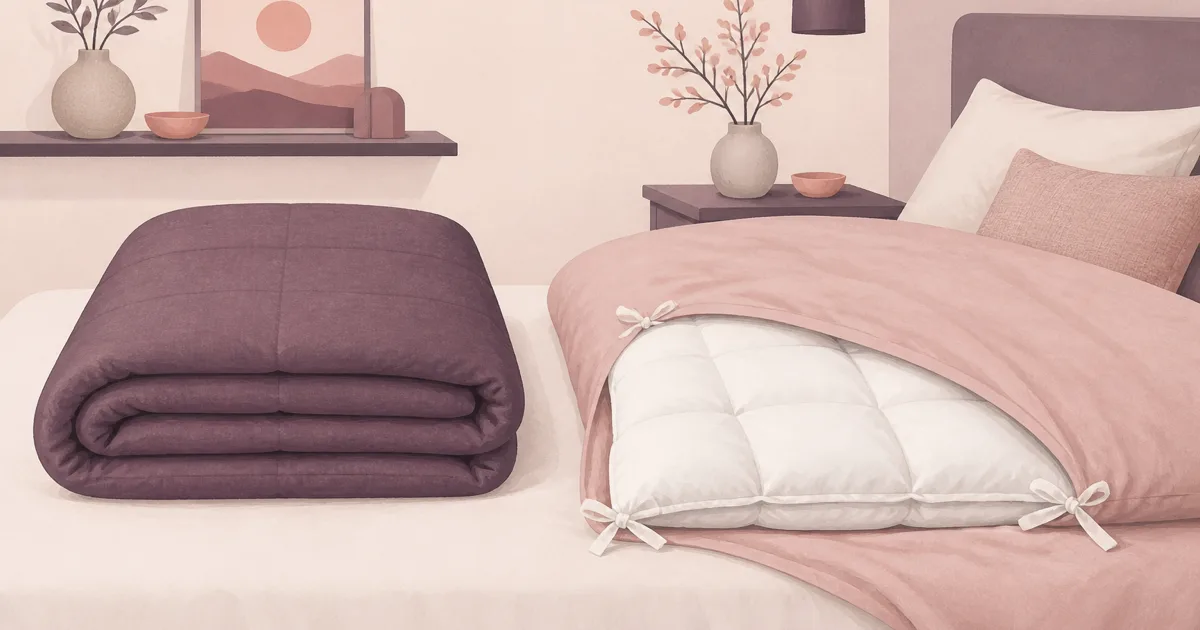
A comforter is a finished blanket. Fill and shell are sewn together. You sleep under it, wash the whole thing, and put it back on. A duvet is a system: a fill insert plus a cover with ties, buttons, or a zipper. You wash the cover the way you wash a sheet. The insert stays cleaner longer.
If you landed here from a cooling-comforter search, start with our best cooling comforter guide when heat is the job. Those picks are built to be used without a cover. This page is the broader setup choice: one sewn piece versus an insert you dress.
A guest room that gets used twice a month does fine with a comforter. A household that washes bedding every week usually prefers a duvet, because a wet comforter is a project. Neither setup is more “correct.” Match the laundry, not the catalog photo. For the rest of the layers, our bedding library gathers sheets and protectors, including a quiet mattress protector that keeps the mattress clean under either setup.
Comforter vs duvet, side by side
Neither setup is more “correct.” A guest room that gets used twice a month does fine with a comforter. A household that washes bedding every week usually prefers a duvet, because a wet comforter is a project.
When a comforter is the better buy
Buy a comforter when you want fewer moving parts. There is no zipper to snag, no insert sliding to the foot of the bed, and no extra Amazon order for a cover that might be a different queen size than the insert.
The REST Evercool Cooling Comforter is the clear example of a sewn piece that should stay a comforter. The cool-touch shell is the point. Put a cover over it and you paid for a surface you can no longer feel. Wash it on a gentle cycle, dry it fully, and treat it like one layer.
A comforter also wins in a small washer situation if you pick a lighter fill. Thick hotel-style comforters often do not fit a compact apartment machine. Check the packed size and your washer drum before you assume “machine washable” means your machine.
Choose a comforter if: you want one item, you like a finished look out of the bag, or you specifically want a cool-touch shell.
Skip a comforter if: you hate drying a bulky blanket, or you want to change colors without buying new fill.
When a duvet is the better buy
Buy a duvet when laundry frequency is the constraint. A cotton or microfiber cover is closer to sheet weight. You can keep two covers in rotation, the way you keep two sheet sets. The insert stays on the bed while one cover is in the wash.
The Bedsure Comforter Duvet Insert is built for that job. It is a quilted down-alternative insert with eight tabs, so you can tie it into a cover instead of hoping friction keeps it centered. It can also sit on the bed uncovered if you want a plain white layer for a night. Most people still add a cover, because an uncovered insert pills and stains faster. For a fuller insert shortlist, see best duvet insert.
Duvets ask for a little technique. Corner ties only work if you use them. If stuffing a cover sounds miserable, read how to put on a duvet cover before you order the system. The burrito method is slower the first time and much faster after that.
Choose a duvet if: you wash bedding weekly, you like seasonal colors, or you want to keep fill out of the washer.
Skip a duvet if: you will never tie the corners. An untied insert becomes a lumpy sausage by week two.
Warmth, heat, and extra layers
Fill weight matters more than the word “duvet” or “comforter.” A light cooling comforter can sleep cooler than a thick all-season insert plus a heavy cover. A baffle-box insert can sleep warmer than a thin sewn comforter.
Hot sleepers should be careful with duvet covers on cooling products. Extra fabric over a cool-touch shell cancels the reason you bought it. If night heat is the problem, stay with a dedicated cooling comforter and breathable bamboo sheets rather than adding a cover “for luxury.”
Cold sleepers can layer a blanket on top of either setup. It is easier to add a throw than to guess a heavier fill from a product photo.
Size and fit notes that actually matter
Match insert size to cover size. A queen insert is commonly about 88 by 88 inches. A queen comforter might be 88 by 88 or 90 by 90. Those two inches change drop over the sides.
If you use a thick mattress topper, the bed sits higher. You may want a slightly larger comforter or an oversized cover so the sides still drape. That is a drop decision, not a reason to mix queen fill with a king cover.
Measure the bed once: mattress depth, topper, and how much overhang you like at the foot. Then buy one system and keep the receipt until you have slept under it for a week.
Care, without making it a second job
Wash comforter fills on gentle, low heat, and give them room in the drum. Tennis balls in the dryer are optional. Fully dry fill matters more than a clever trick. Damp down-alternative clumps.
Wash duvet covers with sheets. Close the zipper or button the closure first so it does not catch other laundry. Skip high heat if the cover is microfiber or viscose.
Keep one spare cover if you can. That spare is the whole point of the duvet system. Without it, you are back to waiting on the dryer, which is the comforter problem in a different outfit.
Final take
For duvet vs comforter, pick the laundry pattern you will actually follow. The REST Evercool Cooling Comforter is the better one-piece path, especially if you want a shell you should not cover. The Bedsure Comforter Duvet Insert is the better system path if you want a washable cover and tabs that hold the fill in place.
If you already know you want a duvet, learn the stuffing method next. If you already know you sleep hot, stay on the cooling-comforter guide and do not add a cover just because hotel beds use one.
Frequently Asked Questions
What is the difference in a duvet vs comforter?
A comforter is one sewn blanket. A duvet is two pieces: a fill insert and a removable cover that takes the wear and the laundry.
Is a duvet warmer than a comforter?
Not automatically. Warmth comes from fill weight and how many layers sit on top of you. A heavy comforter and a heavy insert can feel similar. The cover adds a little extra fabric.
Do I need a top sheet with a duvet?
Optional. Many people skip the top sheet because the cover is the washable layer. Keep a top sheet if you like that extra barrier or share a bed with someone who does.
Can I put a cooling comforter in a duvet cover?
Usually you should not. Cool-touch shells work best against skin. A cover blocks that surface. Use a cooling comforter as a comforter, or pick a regular insert if you want a cover wardrobe.
Which is easier to wash, duvet or comforter?
The duvet cover is easier, because it is lighter and can go in a normal home washer. A thick comforter often needs a large machine and a long dry time.
Can a duvet insert be used without a cover?
Yes, if you like a plain white quilted look. Most inserts look like a hotel spare until you add a cover. Ties and tabs are there for a reason.
What size duvet insert should I buy?
Match the cover size, not only the mattress size. A queen insert in a king cover will drift. Measure the cover flat, then pick an insert with similar width and length.