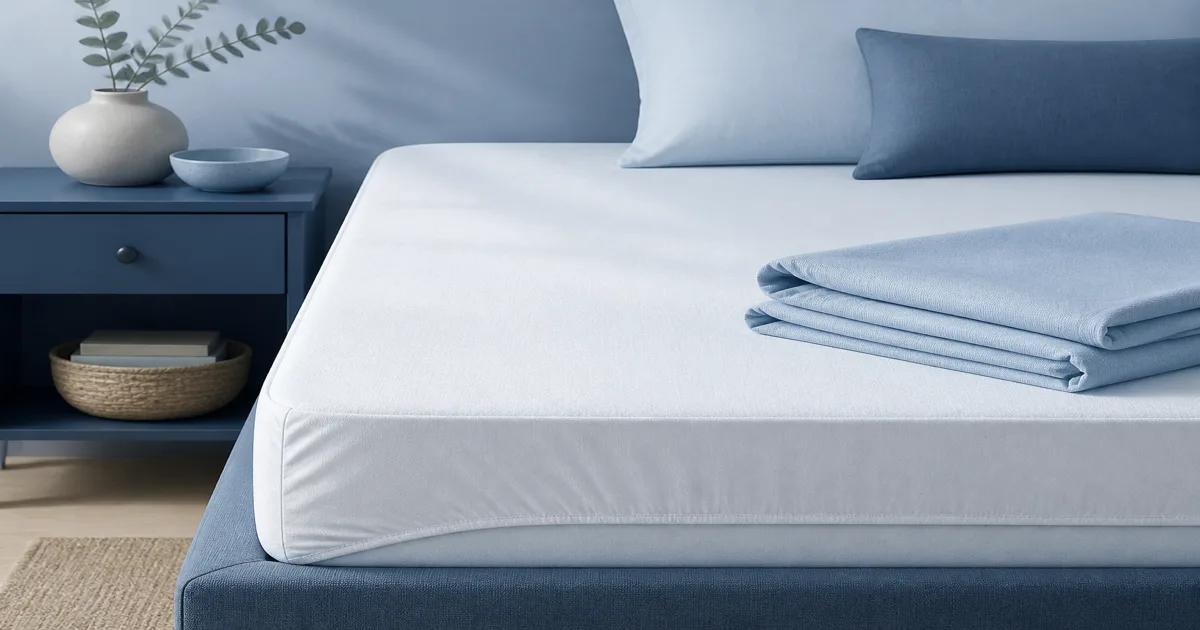
Best Waterproof Mattress Protector (2026): Quiet Covers That Actually Stop Spills
Bedding
A waterproof mattress protector should stop spills, stay quiet after a wash, and keep the bed feeling like a bed. The picks below are based on our own spill tests and thousands of owner reviews.
Our picks
Browse more bedding guides for pads, sheets, and protectors in one place. If you also want breathable cushion after the waterproof layer is on, compare a cooling mattress pad rather than asking a protector to soften the bed. For new parents setting up a kid room, the best mattress for kids guide covers the full flippable hybrid or low profile foam picks that pair with a protector like the ones in this guide.
A mattress is expensive to replace and awkward to deep-clean. One spilled glass, one sick night, or one puppy accident can leave a permanent smell if the foam drinks the liquid. The job of a waterproof mattress protector is simple: stop fluid, stay quiet, and keep the bed feeling like a bed.
You do not need spa language for that. You need a fitted cover with a real waterproof membrane, pockets deep enough for your mattress, and a wash routine you will actually follow.
What matters more than the marketing label
Waterproof vs water resistant. For kids, pets, or anyone who wants real insurance, buy fully waterproof with a polyurethane backing. Water resistant fabric alone is not enough for a soaked spill.
Surface feel. Cotton terry and quilted soft tops keep more of your mattress hand-feel. Older vinyl protectors sleep hot and loud. Polyurethane membrane protectors under cotton terry are the modern default and stay quiet after the first wash.
Pocket depth. Pillow-top and hybrid mattresses run tall. Check the listed depth range before you order queen or king. The Parkdeny pad stretches up to 21 inches deep, the deepest here, so it handles a mattress plus a topper. SafeRest fits up to 18 inches, which covers most pillow-top builds. If the protector fits but the sheet pops off, the next fix is deep pocket sheets, not a second protector.
Noise after washing. Many protectors sound crinkly out of the bag. A wash and dry cycle usually softens the membrane. If it still crackles loudly after that, return it. The Parkdeny pad is vinyl-free and buyers say it stays quiet with no plastic crinkle, and SureGuard is the quietest of the thin terry options in this guide.
Care. Machine-washable covers are the ones people keep using. A "protect forever, never wash" product fails in real homes. Use cool water and tumble dry low or air dry to keep the polyurethane barrier intact over time.
Head-to-head comparison
All four use a fitted-sheet style with stretch pockets. All four sit under your regular sheet, not replace it. None should feel like sleeping on a camping tarp if you avoid cheap vinyl.
Parkdeny: the best waterproof protector overall
The Parkdeny Queen Quilted Fitted Waterproof Mattress Pad is the pick when you want protection and comfort from the same layer. Instead of a thin membrane under terry, it quilts over 30 ounces of hollow cotton into a diamond-stitch top, then lines it with a vinyl-free TPU membrane. The result is a cover that feels like bedding and still keeps liquid off the mattress.
That matters for the everyday spills that ruin mattresses: sweat, kids' accidents, and pet mishaps. The membrane blocks them, and because it is sealed under a quilted cotton surface it does not announce itself with a plastic rustle. Buyers repeatedly describe it as smooth to lie on with no crinkle when they move.
Cushion is the bonus most protectors skip. A thin cover protects but leaves the bed exactly as firm as before. This pad softens first contact at the shoulders and hips while it protects, so it doubles as a light comfort layer. The deep 360-degree skirt grips mattresses up to 21 inches, which covers tall hybrids and a mattress with a topper on it.
Choose Parkdeny when you want your protector to feel like part of the bed. Skip it if you specifically want the thinnest possible terry barrier with no loft, in which case SafeRest is the better fit.
SafeRest: the thin terry value
SafeRest is the volume king for a reason. Parents, pet owners, and rental hosts keep buying it because spills stay on the protector instead of in the mattress. The terry surface softens the waterproof layer enough that most people stop noticing it after a night or two. The polyurethane backing is the waterproof membrane that survives multiple wash cycles, which is the real test a protector has to pass. It adds no padding, which is exactly what you want if the bed already feels right.
Wash it before the first night if it arrives tightly packed. That opens the terry loops and reduces new-product stiffness. Then put your fitted sheet on top like normal. Soft jersey sheets stretch especially well over a protector skirt.
Choose SafeRest if: you want a thin, proven waterproof layer with no added padding and the longest warranty in the category. Skip SafeRest if: you want the pad itself to add cushioning and quiet softness.
SureGuard: when you want to pay for quiet
SureGuard does the same job with a nicer finish. Buyers who switch to it often cite less crinkle and a nicer cotton terry surface. It still has to prove waterproofing the same way: liquid on top, dry mattress underneath.
If you already tried a bargain protector and hated the noise, SureGuard is the cleaner upgrade path than abandoning protectors entirely. A dry mattress matters more than a perfectly quiet bed with no cover at all.
Choose SureGuard if: quiet sleep and cover feel are worth the extra spend. Skip SureGuard if: you just need a reliable first protector for a guest room or dorm.
Beckham quilted hybrid: soft cover plus waterproofing
The Beckham Hotel Collection Queen Hybrid Mattress Pad & Protector is the quilted lane. You get pillow-top loft over a waterproof barrier in one fitted layer, so the bed feels softer than thin terry without buying a separate foam topper.
Choose it when you want the cover to feel plush and still stop spills. Skip it if you specifically want a thin terry surface with zero added loft, or if heat is already a problem and you need the lightest membrane possible.
Choose Beckham if: you want quilted softness and waterproofing together. Skip Beckham if: you already know you prefer thin terry and will pay for SureGuard.
How to install and live with one
- Strip the bed and vacuum the mattress surface.
- Wash and dry the protector once if the brand recommends it.
- Stretch the pockets over the corners the same way you fit a sheet.
- Add your mattress topper only if your layer order calls for it, then the protector as planned, then sheets.
- Keep a second protector if accidents are frequent so one can wash while the other stays on the bed.
If you use a thick topper, confirm whether you are protecting the mattress under the topper, the topper surface, or both. Foam toppers drink spills fast.
Protector vs encasement
A fitted protector covers the sleep surface and sides. That is enough for most spill and sweat problems.
A zippered encasement wraps the whole mattress. Choose that when you are dealing with bed bug prevention protocols or want full allergen sealing. Encasements are warmer and fussier to put on, so do not buy one by accident when you only needed a fitted waterproof cover. See protector vs encasement if you are unsure.
Heat, noise, and return checks
Waterproof membranes block liquid. They also change airflow a little. If you already sleep hot on memory foam, pick a thin breathable protector and skip thick quilted pads that add insulation unless you want that loft.
Do a simple water test after the first wash if you are nervous: pour a small amount on the surface, wait a few minutes, then lift the protector and check the mattress. Dry everything fully before you remake the bed.
Return a protector that still crackles loudly after washing, that will not stretch over your mattress depth, or that leaves the bed feeling plasticky after three nights. A cover you rip off by week two is not protection.
Size and household notes
Match the labeled size to the mattress, not the sheet brand nickname. A "queen" protector on a short-queen RV mattress will bag and shift.
Homes with kids or pets often do better with two protectors in rotation. One stays on the bed while the other washes. That habit matters more than upgrading to a third brand.
If you also shop foam comfort layers, read the best mattress topper guide so you protect the right surface. Foam toppers without a barrier become the new spill sponge.
Final take
If you are still choosing between waterproof coverage and quilted cushion, start with mattress protector vs mattress pad.
For most US buyers, the Parkdeny quilted waterproof pad is the best starting point. It pairs a cushioned quilted surface with a quiet vinyl-free TPU membrane, so one layer protects the mattress and softens the bed at the same time.
Choose SafeRest when you want a thin terry protector with no added loft and the longest warranty in the category. Choose SureGuard when you have already decided you will keep a protector long term and want a quieter terry surface. Pick Beckham when soft quilted pad-and-protector feel matters more than thin terry branding.
If night heat is the next layer, compare best cooling sheets after the protector is on. For foam comfort upgrades, stay with the best mattress topper guide.
Frequently Asked Questions
What is the best waterproof mattress protector that actually works?
The Parkdeny Queen Quilted Fitted Waterproof Mattress Pad is the pick for most US buyers because it combines a quilted, cushioned surface with a quiet vinyl-free TPU waterproof backing in one fitted layer, and its deep skirt grips mattresses up to 21 inches. Choose the SafeRest Waterproof Mattress Protector when you want a thin terry layer with no added padding: its polyurethane backing survived two rounds of synthetic urine plus seven rounds of laundering in Wirecutter's independent spill tests, which is the real proof that a waterproof protector works. Pick SureGuard when you want a softer cotton terry hand, or the Beckham Hotel Collection when you want quilted pillow-top loft with a waterproof barrier built in.
What is the best brand for mattress protectors?
Parkdeny is the strongest all-round brand here because its quilted pad pairs real cushion with proven waterproofing, and buyers consistently call it quiet with no plastic crinkle. SafeRest remains the most proven brand for a thin waterproof layer, thanks to the scale of its review sample and the 10 year warranty that backs the cotton terry build. SureGuard sits in the same family of cotton terry waterproof covers with a slightly quieter surface feel. For quilted loft over waterproofing, Beckham Hotel Collection is the right brand. Avoid no-name vinyl protectors that crackle and trap heat, especially for kids and anyone with night sweats.
What type of mattress protector is best?
A fitted sheet style with a cotton or quilted top and a polyurethane or TPU waterproof backing is the best type for most buyers. The Parkdeny pad adds quilted hollow cotton over its TPU membrane, so the bed feels soft rather than like a camping tarp, and the membrane stays quiet. A cotton or cotton blend terry top with a polyurethane backing is the pick when you want the thinnest possible layer with no added loft. Quilted protectors feel warmer; zippered encasements wrap the whole mattress and are the right type for bed bugs and full allergen sealing, not for everyday spill protection.
What are the downsides of using a mattress protector?
Cheap vinyl protectors sleep hot, crinkle loudly, and trap heat under memory foam. Cotton terry protectors with a polyurethane backing solve most of those complaints, but they still change the feel of the mattress by a small amount. Quilted protectors add pillow-top loft that may run warmer than thin terry covers, especially on memory foam. The other downside is care: a protector that is not machine washed and dried on low heat can lose its waterproof barrier within a year.
Are waterproof mattress protectors noisy?
Cheap vinyl ones are. Modern polyurethane membrane protectors under cotton terry or quilted tops are much quieter, especially after the first wash and dry cycle. The SafeRest cotton terry protector has a soft hand and gets quieter after washing. The SureGuard build is the quietest option in this guide at the same waterproof level.
How often should I wash a mattress protector?
Every few weeks with sheets is fine for most homes. Wash sooner after spills, illness, or pet accidents. Use cool water and tumble dry low or air dry, because high heat can damage the polyurethane waterproof barrier over time. Keep a second protector in rotation so one can wash while the other stays on the bed.
Fitted protector or full encasement?
A fitted protector handles everyday spills on the sleep surface and is the right choice for most homes. A zippered encasement wraps the entire mattress and adds six-sided bed bug and allergen sealing, which is the right choice for severe allergy households and active bed bug situations. Encasements run warmer and are fussier to install, so do not buy one by accident when a fitted waterproof cover was all you needed.
Will a protector fit a deep or pillow-top mattress?
Check the listed pocket depth before you order. The Parkdeny pad fits up to 21 inches deep, which covers tall hybrids and a mattress with a topper stacked on it, and the SafeRest fits up to 18 inches, which handles most pillow-top builds even with a 3 inch topper. If the cover fits but the sheet pops off, the next fix is deep pocket sheets over the protector, not a second protector.
Is a quilted mattress pad the same as a waterproof protector?
Not usually, but the best ones combine both. A plain quilted pad adds softness and loft without blocking liquid. The Parkdeny pad and the Beckham Hotel Collection hybrid both pair a padded top with a waterproof membrane, so one layer does both jobs. A pad with no membrane will not save the foam from a spill. Look for the word waterproof in the listing, not just water resistant, when the goal is real spill insurance.
What is the best mattress protector for kids and pets?
Start with the Parkdeny pad for cushioned everyday waterproofing and a deep skirt that survives mattress toppers and tall hybrids, or the SafeRest if you want a thin terry layer that washes fast. Keep a second protector so one can wash while the other stays on the bed. For accidents that come with potty training or new puppies, a waterproof layer with a machine-washable quilted top is easier on the bed than a thin barrier alone, and it dries faster than a deep foam topper would.