Mattress Protector vs Encasement: Which Cover Does Your Bed Need?
Bedding
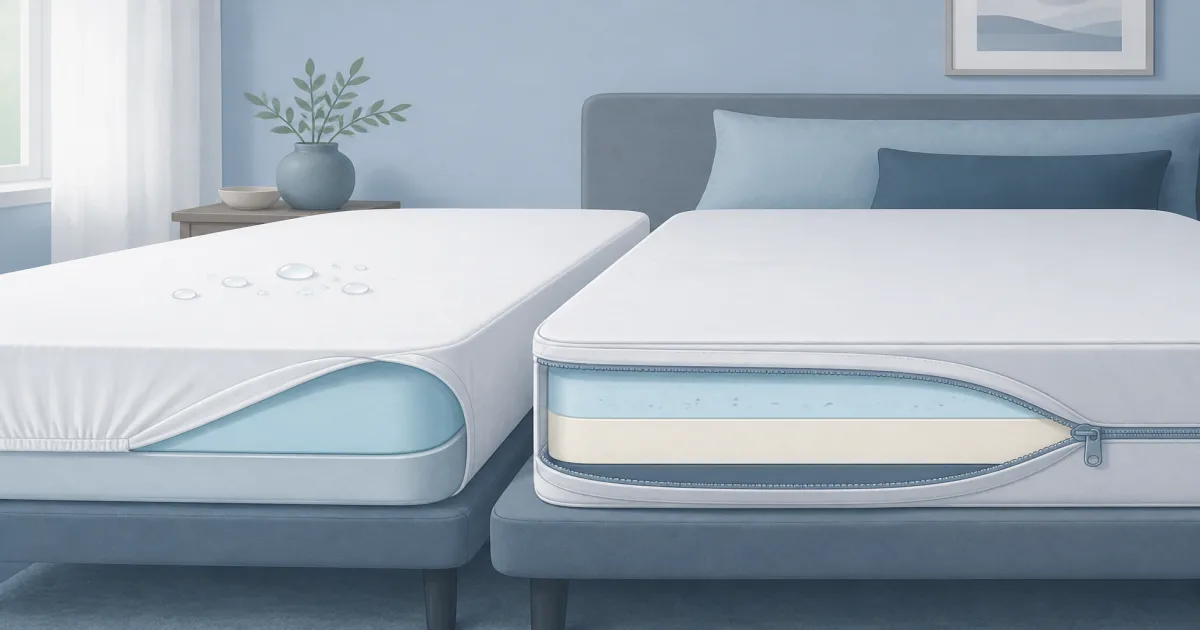
A mattress protector covers the top and sides for easy washing. An encasement zips around all six sides for fuller long-term coverage.
Our picks
The terms sound interchangeable, but a mattress protector and an encasement solve different problems. One is a removable top layer. The other is a full wrap that stays on the mattress much longer. Picking the wrong one can leave you doing more laundry or buying coverage you do not really need.
Use a fitted protector for spills and sweat you wash off every month. Use a zippered encasement when you want the bottom and sides covered too, including bed-bug barrier plans. Many homes keep both: the encasement stays on, and the protector takes the weekly mess. For the wider set of layers, our bedding roundup covers pads and sheets, and a quiet mattress protector is the everyday starting point.
The practical difference
| Feature | Mattress protector | Mattress encasement | | --- | --- | | Coverage | Top and usually sidewalls | Top, sides, and bottom | | Installation | Fits like a deep fitted sheet | Zips around the whole mattress | | Normal washing | Every month or two | Less often, depending on need | | Best for | Everyday spills and sweat | Full coverage and long-term protection |
A fitted protector like the SafeRest Waterproof Queen Mattress Protector is the easier choice for most homes. Pull it off when there is a spill or when you change bedding, then wash it on a gentle cycle. It protects the surface you sleep on without asking you to lift a mattress.
The Linenspa Encasement Waterproof Mattress Protector works differently. It closes around the whole mattress with a zipper, including the bottom. That makes it useful when you want complete coverage, but installation is a two-person job on a larger bed and it is not something most people remove every week.
Choose a protector for ordinary messes
Use a fitted protector if your main worry is sweat, drinks, pets, children, or making mattress care easier. It sits immediately under the fitted sheet, so it is simple to wash after an accident. It also makes sense when you rent, own a guest bed, or want to keep a newer mattress clean without changing its setup much.
Check the pocket depth before buying. A protector that fits a 12-inch mattress may not fit after you add a three-inch topper. For care instructions, read our guide on washing a mattress protector.
Choose an encasement for complete coverage
An encasement is for situations where covering the sides and underside matters as much as the sleep surface. It can be useful for allergy management, a move, stored mattresses, or bed bug concerns. It should not be treated as a replacement for professional pest advice if you suspect an active infestation.
Measure the mattress height first. A cover that is too shallow puts pressure on the zipper; one that is too loose can bunch under sheets. Our bed bug mattress encasement guide compares full-coverage options and explains what to check.
Use both when you want the easiest routine
There is no rule that says you must choose one. An encasement can stay on for six-sided coverage while a fitted protector sits on top for routine washing. The protector catches the everyday mess, and the encasement remains a backup barrier underneath.
Do not confuse either layer with a mattress pad. A pad adds a little softness. A topper makes a larger comfort change. If your real concern is a hard bed rather than a spill, use a comfort layer instead of buying a thicker waterproof cover.
Final take
For everyday life, a mattress protector is the simple answer. For complete, long-term coverage, an encasement is the better tool. Use both if you want full coverage without stripping a zippered cover after every spill. Start with your actual problem, then buy the layer that matches it.
Frequently Asked Questions
Is a mattress encasement better than a protector?
It is better for full six-sided coverage. A fitted protector is better for quick removal and frequent washing.
Can I use both?
Yes. Leave an encasement on the mattress and put a fitted protector over it for easier spill cleanup.
Do encasements prevent bed bugs?
They are a physical barrier and can be part of a prevention or treatment plan. They do not diagnose or eliminate an active infestation on their own.
Does either one make a bed softer?
No. A mattress pad or topper changes comfort. Protectors and encasements are primarily barrier layers.
Which one should I buy for everyday spills?
A fitted protector is the simpler choice for sweat, drinks, pets, and kids. It sits under the fitted sheet and washes on a gentle cycle after an accident.
Can I wash a mattress encasement?
Yes, most are machine washable, but they usually stay on longer and come off less often than a fitted protector. Check the label and use a gentle cycle.
How do I choose the right size?
Measure the mattress height before you buy. A cover that is too shallow puts pressure on the zipper, and one that is too loose can bunch under the sheet.