Mattress Pad vs. Mattress Topper: Which Layer Changes Your Bed?
Bedding
A mattress pad adds a little softness and easier care. A topper changes how the bed feels. Here is how to tell which one your mattress actually needs.
Our picks
The names sound almost interchangeable, which is why people order a thin mattress pad when they needed three inches of foam, or buy a huge topper when a washable layer would have solved the problem. Both products sit under your fitted sheet. They do very different jobs.
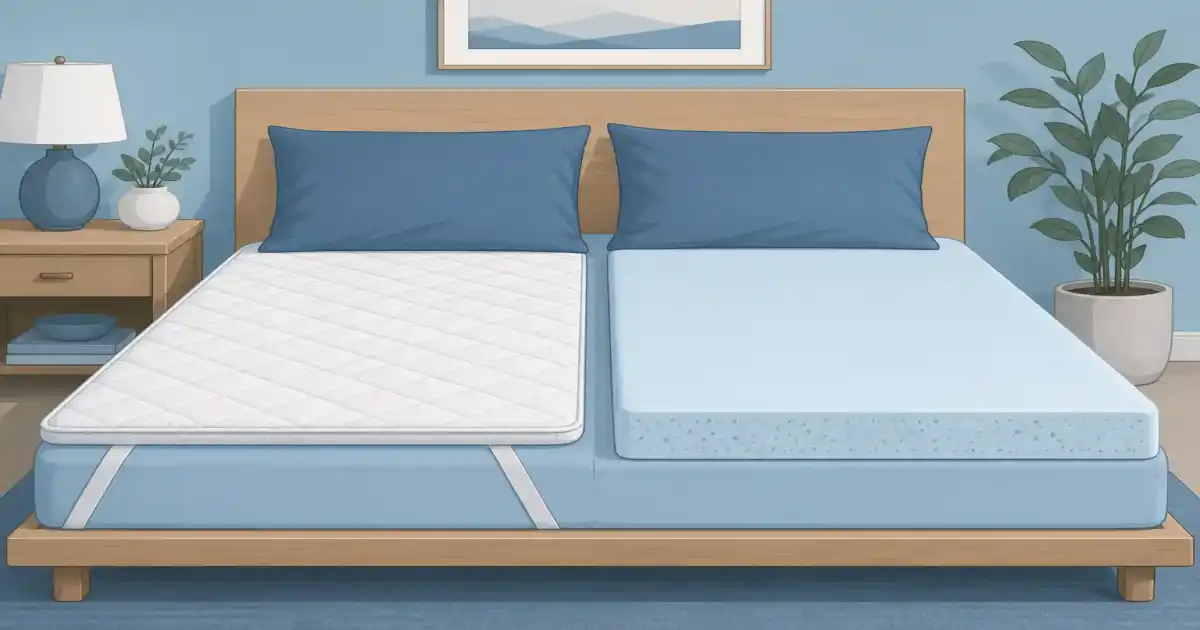
The simplest distinction is thickness. A mattress pad is usually thin and quilted. A mattress topper is generally two to four inches thick and made from foam, latex, fiber, or a layered construction. A pad fine-tunes the surface, while a topper can substantially change it. Whichever layer you pick, our bedding guides collect the sheets and protectors that go over it.
Is a mattress pad the same as a mattress topper?
No. A pad is a thin quilted layer, usually under an inch, that adds light cushion and often washes like a sheet. A topper is two to four inches of foam, latex, or fiber that changes how the bed feels and where pressure lands.
How thick is each layer?
What does each layer actually change?
A pad changes what the surface feels like under your palm. A topper changes where your body sinks and where pressure lands on your shoulders and hips. That single difference is why a pad can feel nice for an hour while a topper is what fixes a bed that hurts.
Will a mattress pad make a hard bed soft?
A little. A pad under an inch thick smooths the surface but does not change where pressure lands. If your shoulders or hips hurt on a firm bed, you need the two to four inches a topper adds, not a thin quilted layer.
That does not make a pad useless. It is the right answer for a bed that is already comfortable and just needs a softer touch, or for a guest room where you want a washable layer that is easy to keep fresh. Our best mattress pad guide covers quilted options that fit different bed depths.
Can a topper fix a sagging mattress?
No. A topper can hide a shallow dip for a while, but it sits on top of the problem. A broken support core or a permanent valley in the middle needs a new mattress, not another comfort layer.
This is the mistake that costs the most money. People buy four inches of plush foam to cover a sag, then find the dip still there because the support underneath never recovered. If the mattress has lost its structure, spend on a replacement and use a thin pad or protector to keep it clean.
How much does each layer cost?
A basic quilted pad often runs about $25 to $60. A quilted waterproof pad runs about $40 to $80. A three-inch foam topper runs about $60 to $160. The topper costs more because it uses several inches of foam and lasts about 3 to 5 years.
Prices move with size and sales, so treat these as ranges rather than fixed figures. The point is that a topper costs more and does more. If your only goal is a cleaner bed with a softer touch, a pad costs less.
Do you need both a pad and a topper?
Not usually. Most people pick one. You can stack them, but the total height can push a fitted sheet past its pocket depth, so measure before you order. A 12-inch mattress with a 3-inch topper and a 1-inch pad is a 16-inch stack.
Does the stack still fit your sheets?
Many deep-pocket sets are cut for about 14 to 16 inches. Once a topper, a pad, and a protector stack up, corners pop off even on a good sheet. That comes from the pocket depth, not from the topper. Measure the full stack and buy sheets to match before you blame the layer.
Which one should you buy first?
Buy the pad first when the bed feels fine and you want a washable cushion plus some spill insurance. Buy the topper first when the bed feels hard and you wake with pressure on your shoulders or hips. If the mattress sags, buy neither.
The pad that also blocks spills: Parkdeny Queen Quilted Fitted Waterproof Mattress Pad
Best for: A bed that already feels fine and needs light cushion plus spill insurance.
The Parkdeny Queen Quilted Fitted Waterproof Mattress Pad is the pad to buy when you want a small comfort bump and do not want to stack a separate protector on top. It is a quilted pad and a waterproof cover in one fitted layer, so one purchase does both jobs and saves a step at bedtime.
The topper for a real feel change: Best Price Mattress 3 Inch Ventilated Memory Foam Mattress Topper
Best for: A firm mattress that hurts your shoulders or hips.
The budget foam topper: Linenspa 3 Inch Gel Infused Memory Foam Mattress Topper
Best for: Testing a plush foam layer before spending more.
Our sleep-trial log
The pattern held across our testing: a pad smooths the surface, while a topper changes how the bed feels. Which one you want depends on how much of a change the mattress actually needs.
What a pad and a topper will not fix
A pad does not waterproof the bed unless it is specifically sold as a protector. A topper does not fix broken coils or a mattress with a permanent valley. Neither should be used to mask a mattress that sags enough to throw your hips out of line.
If spills, kids, pets, or night sweats are the main concern, a mattress protector is the first item to buy, and you can put it over either a pad or a topper. If the bed feels too firm, start with the best mattress topper guide instead.
Heat, cleaning, and sheets
A pad is usually easier to wash because you remove it like a bulky fitted sheet. A foam topper holds more body heat and is a spot-clean item unless it has a removable cover, so read our how to clean a mattress topper guide before you soak one.
Heat is worth watching too. Foam warms to body temperature after about 30 to 60 minutes, so a hot sleeper may prefer a breathable pad with cooling sheets over a thick foam layer. A pad never stores that heat the way foam does.
Final take
Mattress pad versus mattress topper comes down to how much change you need. A pad is a washable light cushion, and the quilted Parkdeny version even blocks spills. A topper is a serious comfort layer for a bed that feels too firm, and the Best Price Mattress 3 Inch is the one to start with. Protect whichever you choose, and do not expect either product to rebuild a mattress that has already lost support.
Frequently Asked Questions
Is a mattress pad the same as a mattress protector?
No. A pad adds a little cushioning. A protector is mainly for spills and allergens. Some products, like a quilted waterproof pad, combine the two jobs, but check the construction.
Will a mattress pad make a hard bed soft?
It may take the edge off. For a major comfort change, a two- or three-inch topper is more likely to help.
Can a topper fix a sagging mattress?
Not usually. A topper can hide a shallow dip, but a broken support core needs replacement.
Do you put a mattress protector over a topper?
Yes. Put the protector over the topper, then add the fitted sheet.
Which is better, a mattress pad or a mattress topper?
It depends on how much change you need. A pad fine-tunes a mattress that is mostly comfortable, while a topper creates a real change in pressure relief on a firm bed.
How thick is a mattress pad compared with a topper?
A pad is usually less than an inch thick and quilted lightly. A topper is generally two to four inches thick, which is why it can soften the surface much more.
Can I use a mattress pad and a topper together?
You can layer them, but measure the total bed height first. A thick topper plus a pad can push your fitted sheet past its pocket depth, so deep-pocket sheets may be needed.
Do you need a pad if you already have a topper?
No. Most people choose one or the other. A topper changes the feel, and a pad mainly smooths the surface or adds protection, so buying both is only worth it when you want both jobs.