Pillow Protector vs. Pillowcase: Why You Usually Need Both
Pillows
Compare pillow protectors and pillowcases by what they block, how often to wash each layer, and why using both keeps a pillow cleaner for longer.
Our picks
Use both when you can. Wash the pillowcase weekly with sheets. Wash the protector every month or two, and wash or spot-clean the pillow itself only according to its care label. This routine is especially useful for foam pillows, because soaking foam can leave it damp for days.
A protector is not a substitute for the right loft. If your neck is bent, fix the pillow height first. Then add the zipper layer so sweat does not ruin the fill you just tuned. For fills and lofts to protect, our pillow line-up covers the category.
Start with the problem you can see
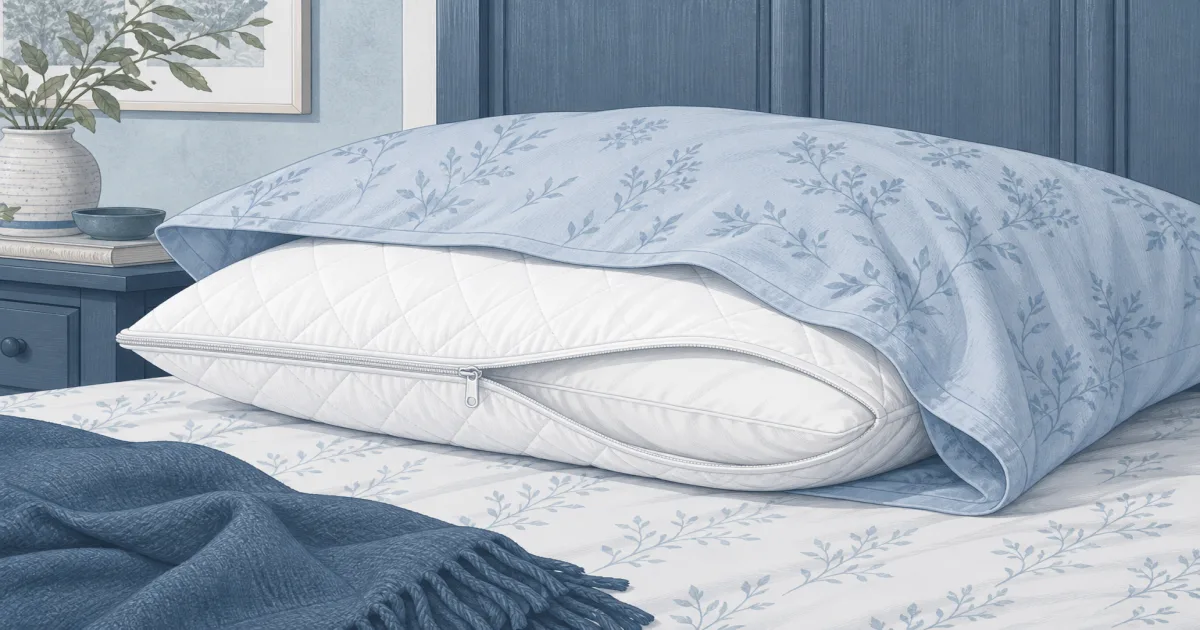
A pillowcase is the soft outer layer you sleep on. A pillow protector is the zippered layer underneath that catches oil, sweat, dust, and small spills before they reach the fill. Look for the simple cause before you add more layers or spend more money. Strip the bed or pillow, check the seams and fill, and take one clear measurement. A setup that worked before may have changed because a topper expanded, a pillow compressed, or a sheet lost its elastic.
The useful goal is a stable, comfortable setup you can maintain. If one part is damaged, replace that part. Do not try to solve a support problem with extra blankets, another pillow, or a tighter sheet.
Choose the right layer
Bedding works best when each layer has one job. The mattress provides support. A topper changes surface comfort. A protector takes the wear that would otherwise reach foam or fill. A pillowcase is the washable layer against your face. When those jobs blur together, products slide, bunch, trap heat, or wear out early.
Use the smallest change that directly addresses the problem. This keeps the bed easier to make, easier to wash, and easier to troubleshoot later. It also helps you tell whether the change actually worked.
A simple setup checklist
- Measure the mattress, topper, blanket, or pillow before ordering a new layer.
- Read the label for depth, weight, fill type, and care limits.
- Set up one change at a time and sleep on it for several nights.
- Wash outer layers on schedule and let every item dry fully.
- Replace an item when it cannot perform its basic job after cleaning or adjustment.
If the product involves foam, do not soak it unless the maker says you can. If it involves a heavy blanket, do not overload a home washer. Those two shortcuts create more work than they save.
Product notes
A soft two-pack like Beckham Hotel Collection Bed Pillows still needs a case you wash weekly. A protector under that case keeps oil out of down-alternative fill so the pillows last longer in a guest room. Skip a thick waterproof protector if you sleep hot and the pillow already feels swampy.
The Coop Home Goods Original Adjustable Pillow is the better everyday pillow if you need loft you can change. Keep a zippered protector over the inner liner, then a regular pillowcase on top. Wash the case often, the protector less often, and do not throw shredded foam in the washer.
Avoid the common mistakes
Do not buy by a vague label alone. “Deep pocket,” “cooling,” “adjustable,” and “supportive” can all mean different things across listings. Look for stated dimensions and materials, then compare those facts to the item already on your bed.
Do not ignore heat or laundry. A thicker layer changes fitted-sheet depth and can trap more warmth. A protector or cover may make routine cleaning much easier, but it also has to fit without pulling the setup out of place. Keep receipts until you know the new layer works in your own room.
When to choose a different guide
If the basic problem is mattress comfort, start with our best mattress topper guide. If pillow support is the concern, compare the best pillow for side sleepers before treating every sore morning as a bedding-care issue. For washing advice, use how to wash pillows or how to wash a weighted blanket and follow the label on your exact product.
Check fit before changing products
A good bedding decision starts with the item you already own. Measure the usable surface, then compare that number with the listed dimensions rather than relying on a label such as queen, standard, deep pocket, or medium loft. Those labels are useful filters, but they do not guarantee that a particular combination will work together. Account for every permanent layer, including a mattress protector, topper cover, or pillow protector.
Pay attention to the details buyers mention after several weeks. A product can have a strong overall rating and still be wrong for a very tall mattress, a hot sleeper, or someone who needs more support. Look for repeat comments about fit, fabric feel, washability, and whether the product stays in place. Short first-impression reviews are less useful than notes from people who have washed or slept on the item for a while.
Keep the setup easy to maintain
The best setup is usually the one you can reset in a few minutes. Make the bed after laundry and check whether corners, zippers, and seams sit flat before you add the next layer. If something shifts on the first night, fix the fit while the bed is stripped. Waiting until it has bunched for a month usually turns a simple adjustment into a frustrating purchase decision.
Keep the care routine realistic. Wash the outer fabric regularly, use low heat when the label calls for it, and let thick materials dry completely. Moisture trapped in foam, fill, or a heavy blanket can create odor long before the surface looks dirty. A removable cover or protector does not make an item maintenance-free, but it can reduce how often you need to clean the difficult part.
Use comfort as the final test
After you make a measured change, sleep with it long enough to notice a pattern. One unusually warm night or a restless week does not always mean the product failed. Repeated discomfort, loose corners, a bent neck, or a layer that needs constant adjustment is better evidence. If the setup still fails after a simple fit check, return to the underlying problem instead of stacking another item on top.
Comfort does not need a complicated formula. The bed should feel stable, the washable layers should stay clean without drama, and you should not wake up thinking about the product you bought. That is a better result than chasing a label or a trend.
Final take
A pillowcase is the soft outer layer you sleep on. A pillow protector is the zippered layer underneath that catches oil, sweat, dust, and small spills before they reach the fill. Make one measured change, then give it a few nights. The right setup should be easy to make, easy to maintain, and comfortable enough that you stop thinking about it after lights out.
Frequently Asked Questions
Do I need both a pillow protector and a pillowcase?
It can improve a practical setup problem, but it cannot repair damaged foam, broken support, or fill that has permanently collapsed.
Should I measure before I buy anything?
Yes. Measure the item and the bed or pillow it needs to fit. A few minutes with a tape measure prevents most bad fit problems.
Does a higher price always mean better fit?
No. Fit, materials, care needs, and honest buyer feedback matter more than a premium label.
How long should I test a new bedding setup?
Give it several nights unless it is clearly uncomfortable or unsafe. Small changes in loft and fabric can take time to judge.
Can I wash these products often?
Follow the individual care label. Wash removable covers and outer layers more often than foam or heavy inserts.
When should I stop and replace the item?
Replace it when it no longer fits, stays clean, or performs its basic support or protection job.