Best Memory Foam Mattress Topper (2026): Plush Softening Without the Quicksand Sink
Mattress toppers
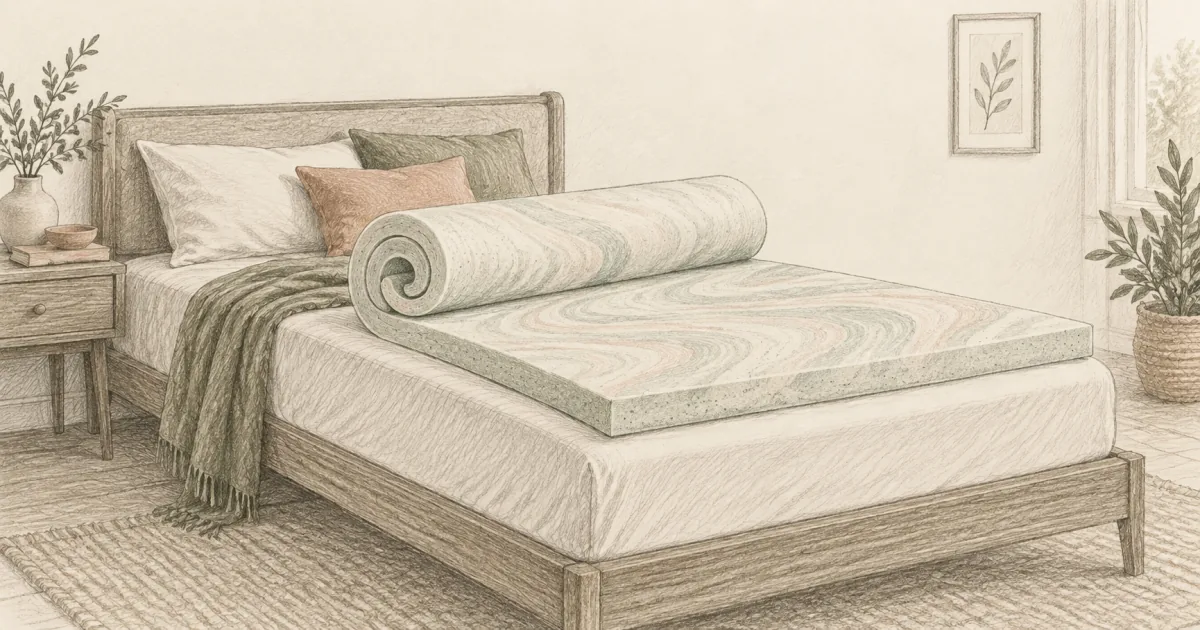
Memory foam mattress toppers soften a firm bed by contouring at the shoulder and hip. Density, gel swirl, ventilation, and expand time decide whether it feels plush or swampy.
Our picks
A memory foam mattress topper is a comfort layer that softens a bed that is still structurally sound but feels too firm on the surface. You are not replacing the support core. You are adding a foam layer that contours at the shoulder and hip, takes the sharp edge off a hotel-hard slab, and gives the bed a plush first touch that an entry-level mattress usually lacks.
Browse more options in our mattress toppers category and the best mattress topper pillar for the full foam, latex, and hybrid lineup. If cooling is the bigger complaint than firmness alone, compare a cooling mattress topper instead. For pressure-driven pain on a still-solid mattress, continue with the best mattress topper for back pain guide.
A memory foam topper works when thickness, density, and foam type all line up with how heavy you are and how warm you sleep. It fails when the foam is too soft for your weight, the loft is too tall for the fitted sheet, or the bed underneath has already broken down. Three inches is the usual firm-bed soften. Denser foam lasts longer and sleeps a touch cooler than a budget cloud.
When a memory foam topper helps and when it flops
Use a memory foam topper when the mattress still supports you but the surface feels too hard, too flat, or slightly worn. Side and back sleepers feel this first at the shoulder. The foam hugs the pressure point instead of forcing the joint to push back into a hard slab.
Skip a memory foam topper when the middle of the bed already sags or the edge collapses when you sit. Soft foam on a broken core adds sink without support. Hot sleepers who already wake damp on foam should also be careful. Extra contour traps more radiant heat. Compare a latex topper or a cooling mattress topper before adding another layer of hug.
What separates a memory foam topper that works from one that flops
Three numbers do most of the work, and they matter more than the brand label on the box.
Thickness. Two inches is a fine-tune for a mattress that is almost right. Three inches is the common middle for a firm bed. Four inches can feel like a new bed and almost always needs deeper fitted sheets. Pick thickness by how much the surface feels too firm, not by the deepest profile on the product page.
Density. Density is weight per cubic foot of foam. A 3 pound memory foam topper is the entry point. A 4 to 5 pound memory foam topper is denser, holds its shape longer, and sleeps a touch cooler because the foam resists compression. Cheap 2 pound poly fills soften within 18 to 24 months, which is the usual reason a topper "stopped working" after a year.
Foam type. Memory foam hugs and traps heat. Gel infusion and vent channels help a little. Latex bounces and breathes. Poly fill is the value middle. The best topper is the one whose foam type matches how you sleep and how warm you run, not the one with the deepest profile in the listing.
A removable washable cover and a CertiPUR-US foam label are worth a few extra dollars when the price is close. Off-gassing is real on the first night. Air the foam out before putting sheets on.
How to choose thickness and density
Two inches is a fine-tune. Three inches is the common middle for a firm mattress. Four inches can feel like a new bed and will almost certainly need deeper sheets.
Choose plush gel memory foam when the complaint is pressure: numb shoulder, bruised hip, hotel-hard surface. Choose denser foam when budget gel felt too sinky, or you want a washable cover and more pushback. Choose the cheapest gel layer only as a test on a core that still holds you up.
Gel swirls and vent holes help a little with heat. They do not make foam cold. If night sweats are the headline, compare the best cooling mattress topper after you know you need this thickness.
Quick comparison
Best overall: Best Price Mattress 3 Inch Ventilated Memory Foam Mattress Topper
Best for: Most people whose mattress is simply too firm.
The Best Price Mattress 3-inch ventilated memory foam topper is the practical center of the best memory foam mattress topper search. You get a plush comfort layer, ventilation channels, and a size range that covers dorm twins through California king. The usual win is shoulder relief on a stiff mattress, not a brand-new bed feel.
Give it a full expand window before you judge firmness. Compressed memory foam can feel uneven on night one. After it settles, use a fitted sheet that can stretch over the extra height, or the corners will pop off.
Skip Best Price Mattress if you sleep hot and already hate memory foam hug, or you need a firmer surface for stomach sleeping. Extra plush under the belly can arch the lower back.
Choose Best Price Mattress if: you want soft pressure relief on a firm, intact mattress. Skip Best Price Mattress if: you sleep hot and already hate memory foam hug, or you need a firmer surface for stomach sleeping.
Best denser support: ViscoSoft 3 Inch Select High Density Mattress Topper
Best for: Sleepers who want more pushback than budget gel memory foam.
ViscoSoft's Select High Density topper sits above the ultra-plush defaults. Higher density memory foam keeps its shape longer and feels less like quicksand. The removable cover is a real daily win if you deal with pets, kids, or night sweats.
This is the better step-up when you liked the idea of a topper but bounced off soft foam that slept hot or collapsed early. It still softens a firm mattress. It just does it with more structure.
Choose ViscoSoft if: you want durability cues and a washable cover. Skip ViscoSoft if: you only need a temporary guest-bed fix and want the lowest price.
Best budget: Linenspa 3 Inch Gel Infused Memory Foam Mattress Topper
Best for: Renters, students, and anyone testing whether a softer surface helps.
Linenspa is the straightforward 3-inch gel memory foam profile that softens firm beds fast. Happy buyers usually wanted a cheaper comfort upgrade. Unhappy buyers often expected forever firmness from soft open-cell foam.
Treat it as a 1 to 3 year comfort layer, not a forever mattress replacement. If it works, you learned your preferred feel before spending on a denser model. If you are over about 200 lbs and want denser foam from day one, skip straight to ViscoSoft.
Choose Linenspa if: price matters more than long peak durability. Skip Linenspa if: you are over about 200 lbs and want denser foam from day one.
Thickness, sheets, and setup checklist
- Measure your current mattress depth so fitted sheets still clip after the topper.
- Unbox in the bedroom and let it expand on a flat surface.
- Add a waterproof protector over the topper before the sheet.
- Sleep on it for a week before changing thickness again.
- If you still feel the hard core, go thicker or denser. If you feel stuck, go thinner.
Stomach sleepers should be careful with thick plush memory foam. Extra loft can arch the lower back. Back and side sleepers are the main winners for a 3-inch gel layer.
Who should buy which pick
If heat is your main complaint, a memory foam topper alone may not fix it. Compare our best cooling mattress topper picks and breathable sheets before you buy a thicker cloud. Foam still stores some heat no matter what the gel swirl looks like in the product photo.
For the hug-versus-bounce choice, read memory foam vs latex topper. Side sleepers who still feel the shoulder on a thin pad should continue with the best mattress topper for side sleepers. For natural fiber cushion instead of foam, compare a wool mattress topper or a latex mattress topper.
Final take
The best memory foam mattress topper is the one that matches your mattress problem. Soften a firm surface with Best Price Mattress. Spend up for ViscoSoft when you want denser memory foam and easier cleaning. Use Linenspa when you need the softener now and can accept a shorter peak life.
If lumbar pressure is the main issue, continue with the best mattress topper for back pain guide. If the hip joint is the pressure point, see the best mattress topper for hip pain guide. Prefer natural fiber cushion over foam? Compare a wool mattress topper. For a dual-layer cushion-plus-support stack, see the best hybrid mattress topper guide. Add a best mattress protector so spills never soak the foam, and switch to deeper sheets if your fitted corners start popping after the new height.
Frequently Asked Questions
What is the best memory foam mattress topper for most people?
Start with the Best Price Mattress 3 Inch Ventilated Memory Foam Mattress Topper. ViscoSoft is better when you want denser foam and a washable cover. Linenspa is the budget entry if you just need to soften a firm rental bed.
How thick should a memory foam topper be?
Two inches is a fine-tune. Three inches is the common middle for a firm mattress. Four inches can feel like a new bed and usually needs deeper sheets.
What density should I look for in a memory foam topper?
A 3 pound memory foam topper is the common entry point. A 4 to 5 pound topper is denser, lasts longer, and sleeps a touch cooler. Anything under 3 pounds is a short-life comfort layer that usually softens within 18 to 24 months.
Do memory foam toppers sleep hot?
They can. Memory foam hugs the body and traps radiant heat. Gel infusion and ventilation channels help a little. Hot sleepers usually pair a thinner profile with breathable sheets or compare a cooling mattress topper first.
How long should I let a memory foam topper expand?
Most compressed toppers need 24 to 48 hours out of the box. Keep sheets off until it looks fully flat. Night one often feels uneven because the foam is still settling.
Can a memory foam topper help with back pain?
It can when the mattress is firm and intact but the surface feels too hard at the shoulder. It will not fix a deep sag or broken coils. For pressure-driven back pain on a still-solid mattress, read the best mattress topper for back pain guide.
Will a memory foam topper make my bed too soft?
Yes if you are a stomach sleeper on a firm mattress. Extra loft under the belly can arch the lower back. Side and back sleepers usually love three inches of gel memory foam. Stomach sleepers should stay near two inches or pick a denser foam.
Should I use a protector over a memory foam topper?
Yes. A waterproof protector keeps sweat and spills out of open-cell foam and makes sheet changes cleaner. Pick a deep-pocket protector if your stack is now 14 inches or taller.
Do I need new sheets after adding a memory foam topper?
Often yes. Measure the new mattress height and switch to deep pocket sheets if corners start popping off at night.
Is memory foam or latex better for a hot sleeper?
Latex breathes more and sleeps cooler. Memory foam hugs more and softens pressure. For the full material comparison, see memory foam vs latex topper. For a hug-versus-bounce cooling comparison, the best cooling mattress topper guide is the better lane.