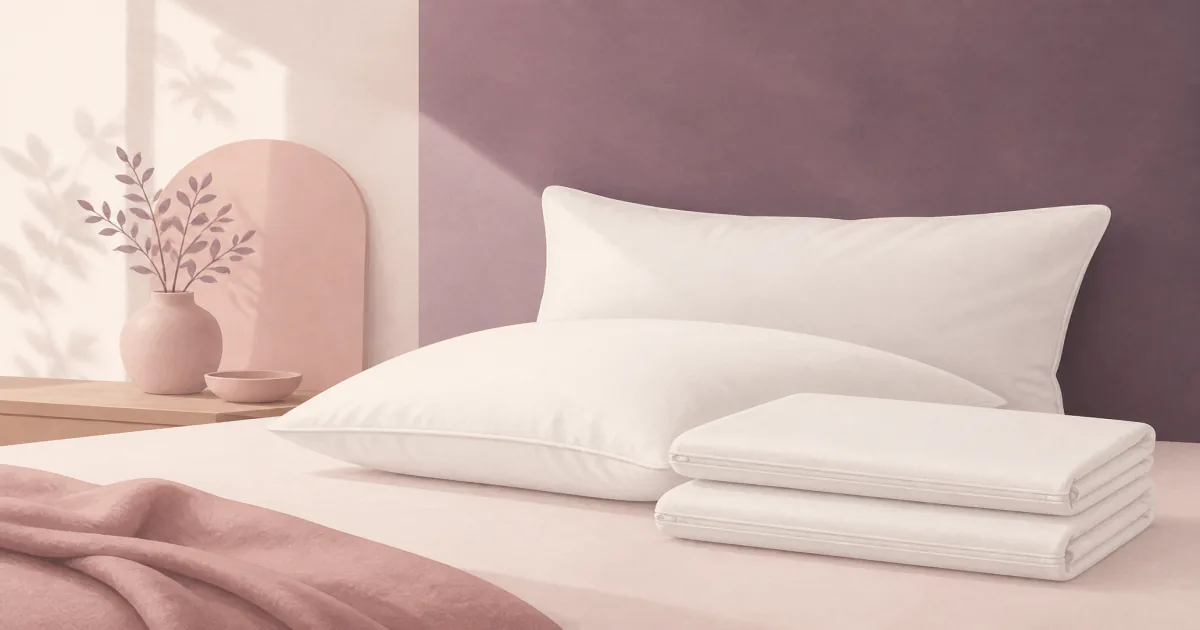
Best Pillow Protector (2026): Quiet Cotton Zip Covers That Stay Put
Pillows
A pillow protector should zip smoothly, stay quiet under the pillowcase, and save you from washing the pillow itself so often. These two cotton picks do that job well.
Our picks
The best pillow protector should disappear once the bed is made. It zips easily, stays quiet under a regular pillowcase, and keeps oil, sweat, and dust away from the pillow fill. If you can feel it crackling or bunching through the pillowcase, it is doing too much.
If you are still deciding whether you even need one, start with our pillow protector vs pillowcase guide. That page covers the layer order. This page is the shopping decision: which protector style is easiest to live with once you already know you want one.
For most people, the right answer is not a thick medical-looking barrier cover. It is a quiet zippered protector that keeps the difficult-to-wash part of the pillow cleaner. That matters even more if you use foam or adjustable-fill pillows that you do not want to soak often. For the wider set of pillows and layers, our pillow guides walk through pillows, covers, and inserts, including the side sleeper guide.
What matters most in a pillow protector
Three things matter more than fancy marketing.
Cotton usually feels best for daily use. More sealed barrier-style protectors can be useful too, but they change the hand feel more. Buy for the job you actually have, not for the most dramatic product claim.
Does a pillow protector need to be waterproof?
Only if spills or drooling are your main problem. A waterproof or barrier layer changes the hand feel and can run warmer. For everyday sweat and skin oil, a plain cotton zip cover does the job without the plasticky feel.
Do cotton protectors stay quiet under a pillowcase?
Good ones do. Look for a tight weave and a smooth zipper, because that is what keeps the cover from rustling when you turn. Cheap cotton with a stiff zip is the usual source of the crinkle people complain about.
How the two picks compare
Both picks are four-packs with a full zip closure, which is the practical sweet spot for a main bed plus a guest room. They differ in how soft they feel and how sealed they are against allergens.
Best cotton value pack: FAUNNA 600TC Cotton Pillow Protectors
Best for: Most sleepers who want a quiet everyday protector that still feels like normal bedding.
The FAUNNA 600TC Cotton Pillow Protectors are the better first pick because they act like bedding instead of equipment. The cotton shell matters here. You want a protector that disappears under the pillowcase, not one that makes the whole pillow feel coated. Independent reviews back the hand feel, with owners calling them soft, quiet, and better than expected for the price.
The four-pack also makes practical sense. One protector on the pillow, one in the wash, and a couple for the other side of the bed or guest pillows is a more useful setup than buying a single premium cover and waiting on laundry day. Spreading the cost across four covers beats buying singles, and the OEKO-TEX certified cotton is the tested part.
Choose FAUNNA if you want the most normal-feeling everyday protector. Skip it if you specifically want a more sealed barrier style because allergy control or spill risk is the priority.
Best allergen-focused option: AllerEase Premier
Best for: Buyers who want a more sealed zip cover and care less about the softest possible hand feel.
The AllerEase Premier Zipper Pillow Protector is the stronger choice when you want a protector that feels more like a barrier layer. The full zip closure matters if your goal is keeping the pillow more tightly sealed instead of just adding a soft washable shell. The brand builds its line around allergy defense fabric that it says blocks 99.9% of household allergens, and the standard and queen sizing covers both common pillow widths.
That extra barrier feeling can be worth it, but it is not free. Protectors like this can feel slightly less soft than a simpler cotton cover. That does not make them bad. It just means you should buy them for a reason. If comfort feel is the only question, cotton usually wins.
Choose AllerEase if you want the more sealed option. Skip it if you already know you are sensitive to stiff or less breathable covers.
Why pillow protectors are worth the trouble
Washing a pillowcase is easy. Washing the pillow itself is not. Foam pillows can stay damp for too long, shredded-fill pillows can clump, and even washable down-alternative pillows wear out faster when they get dragged through the machine all the time.
A protector keeps more of the sweat and face oil in a layer you can zip off and clean. It is a simple upgrade, but it is one that usually makes pillows last longer and smell better. The logic is the same as a mattress protector: keep the expensive, hard-to-wash part clean and put the wear on a cheap, washable layer.
How often should you wash a pillow protector?
About once a month is a good habit, and sooner after illness or a sweat-heavy week. The protector is the layer that catches what the pillowcase misses, so it needs its own wash cycle. Pillowcases still need washing weekly, and the pillow itself can go far longer between deep washes.
Do you still need a pillowcase over a protector?
Yes. The protector is the underlayer that seals the pillow. The pillowcase is the surface your face touches and the piece you wash most often. Skipping the pillowcase makes the protector the sleeping surface, which is hotter, noisier, and harder to keep fresh than cotton.
How to pick the right size and style
Match the protector to the pillow, not to a vague label in your linen closet. Standard, queen, and king pillows vary enough that a snug fit on paper can still feel wrong once zipped. A standard pillow is about 20 by 26 inches, while a queen pillow usually runs 20 by 30 inches, so measure yours before ordering.
King pillows are the outlier at about 20 by 36 inches, so a standard cover will not reach the ends. Give a protector a wash about once a month, which works out to roughly 12 cycles a year, and plan to replace the pillow every 1 to 2 years even with a protector in place.
If you use an adjustable pillow, make sure the protector does not compress it so much that the loft changes. If the pillow already runs hot, lean toward lighter cotton covers instead of thicker barrier fabrics. The best protector is the one that fits the pillow you already like.
What is the difference between a pillow protector and a pillowcase?
A pillowcase is the decorative, washable outer layer. A pillow protector is the zippered inner layer that shields the fill from oil, sweat, and dust. You use both at once, and the protector is the one that does the protecting.
Which protector is better for allergies, cotton or a barrier fabric?
A dedicated barrier fabric is the better allergy choice because it is built to block small particles. Cotton is more breathable and softer, but it is not a graded allergen barrier. If dust mites or pollen are the main reason you are shopping, take the sealed option and keep a cotton pillowcase on top.
Common mistakes
The first mistake is buying a protector that is too tight. That can make a pillow feel firmer and taller than it really is. The second is buying the noisiest barrier cover possible when you never needed that level of protection in the first place.
Another mistake is treating the protector like it replaces the pillowcase. It does not. The protector is the underlayer. The pillowcase is still the weekly washable surface against your face.
A fourth mistake is washing only the protector and never the pillow. The protector slows how fast the fill gets dirty, but it does not stop it. Plan a full pillow wash once or twice a year, and follow the fill instructions. Our how to wash pillows guide covers the machine settings, and the memory foam pillow wash guide covers the fill you should spot clean instead.
Final take
The best pillow protector for most people is the FAUNNA 600TC Cotton Pillow Protector because it balances comfort, quiet fabric, and a practical four-pack count that costs less per cover than buying singles. The AllerEase Premier Zipper Pillow Protector is the better second option when you want a more sealed barrier style and can accept a slightly less soft feel.
Buy the protector that matches the job. Cotton is the safer everyday answer. A more sealed protector makes sense when you actually need it. Either way, keeping the protector under a normal pillowcase is the easy habit that saves your pillow from becoming the hardest thing in the bed to wash. If you want a low-friction outer case for hair and skin, put a silk pillowcase over the protector.
Frequently Asked Questions
What is the best pillow protector for most people?
The FAUNNA cotton protectors are the better first buy because they feel quieter and softer under a pillowcase while still protecting the pillow from sweat and oil. AllerEase is better when a more sealed barrier matters to you.
Do I need a pillow protector if I already use a pillowcase?
Usually yes. A pillowcase is the washable outer fabric you sleep on. A protector sits under it and catches more oil, sweat, and dust before those reach the pillow fill.
Are pillow protectors hot or noisy?
Some are. Cotton zip covers usually feel quieter than stiff waterproof styles. If you already sleep warm, skip thick plasticky protectors unless you specifically need that barrier.
Should I buy cotton or fully waterproof pillow protectors?
Buy cotton for everyday comfort and easier airflow. Move to a more sealed or waterproof style only if spills, drooling, or allergy concerns are the main reason you are shopping.
How often should I wash a pillow protector?
Every month or two works for many homes, with sooner washing after illness, sweat-heavy weeks, or spills. Pillowcases still need weekly washing.
Can a pillow protector change how my pillow feels?
A little. Thin cotton covers barely change the feel. Thick barrier covers can make a soft pillow feel stiffer or warmer.
Do pillow protectors help pillows last longer?
Yes. Keeping sweat, skin oil, and dust out of the fill usually means the pillow stays cleaner and needs fewer full washes.
What size pillow protector fits a queen pillow?
A standard protector fits a 20 by 26 inch pillow. A queen pillow is usually 20 by 30 inches, so buy a standard or queen protector only if the listing states that size, and measure your pillow first.